學術引用 Citation
黃孫權、劉益紅(2016)。「殺馬特」中的現代性——關於城鄉空間生產之社會展示。收錄於邵大箴、范迪安、朱青生(編),《第34屆世界藝術史大會文集》,第一卷,頁1914-1921。北京:商務印書館。 Huang, Sun-Quan & Liu, Yi-Hong (2016). Smart to Modernity: A Social Display Within the Production of Urbanized Space. In Shao Dazhen, Fan Di'an & Zhu Qingsheng (Eds.), Proceedings of the 34th World Congress of Art History, Vol. I (pp. 1914-1921). Beijing: The Commercial Press.
原始刊物頁面
摘要
“殺馬特”,是迷失在中國城市化大潮中的年輕移民,明顯的特點是誇張的髮型與顏色,”殺馬特“由英文smart而來,本是一羣都會的小文藝青年(屌絲)嘲諷城鄉結合部的工廠少年,嘲笑他們文化貧窮,美學低劣的玩笑,卻變成青年農民工自我稱呼與建立網上社羣,自我意識生產的名字,這是由一個階層對另外一個階層的命名與展示。我們對藝術史上類似的事情並不陌生,藝術風格鼓吹手們或媚俗或非出於善意命名新鮮風格,藉此擁有話語權。印象派是由記者因為不滿作品的虛無模糊而隨口稱之“印象”,遂成為此類作品的統稱,Nikolaus Pevsner定義的現代主義設計亦同。只是,“殺馬特”此一社會展示過程較之藝評與藝術品風格的相互指認複雜的多。這不僅只是資產階級內部的鬥爭而已,而是城市指認城鄉,文藝青年指認農民工,知青指認文化貧窮、現代指認未現代的階層鬥爭,是美學的,政治,更是空間的鬥爭。
中國14億人口近半數住在城市中。 據估計到2025年前還要增加3.5億,其中超過2.5億新增人口將來自農村,可以想見此種農民工的生活風格,社會展示景觀的背後,是深刻的階層區分和空間鬥爭的結果。本文企圖透過實際的田野與文獻,詢問什麼構成了中國當代城鄉視覺生產? 中國當代的視覺生產的總是被兩極的構造起來:現代國際被資本浸融的,以及古典中式傳統的,第三者(他者)的存在,展示了某種推遲的和糾結的現代性美學,這恰恰好表現在這些農民工第二代的服飾,語言,生活方式風格之中。如果迴避或錯過這個生機勃勃的部分,視覺生產不過是簡化的西化與中化,現代與傳統的區分,看不到動態的過程,看不到那些時時暗漏產生着卻即將被淘汰的風格,看不到那小市民通過他們有能力買單的風格和視覺來造就自己的主體性的過程,唯有通過理解命名者和被命名的人們,才能接近中國的現代性與城鄉發展的視覺論述,並把視覺和交往變成一個社會和空間過程來研究。
關鍵字:殺馬特 現代性 城鄉關係 空間生產
smart, modernity, urban-rural relations, production of space
新貴們很富,想吸引人注意,但是他們富貴的歷史不長,不炫耀就引不起人 注意,所以他們不會嫌什麼東西太貴,也不會嫌什麼東西太鋪張。
── ### 4. Formal Subsumption (Hauser, 2015, p. 443)
上述景象中國人都有同感,然而這不是描寫當今中國富豪們的消費傾向,是藝術史學家豪澤爾勾勒1860年代法蘭西第二帝國新浮現的資產階級面貌。巴黎作為現代性城市的特徵,正在150年後的中國城市以原創動畫錄影帶(OVA)的方式上演:都市重劃更新,土地金融擴張,歷史街區與傳統生活商鋪消失,漫遊者與小資產階級興起,移民與城市戶口之間的摩擦,工人勞動條件惡劣,藝術品市場蓬勃等等。說是以OVA的方式,是因為西方已經進行過“真正的”現代化,其他世界的發展不會太新鮮。想想斯圖亞特·霍爾老早讓我們謹記”西方和其他”(The west and the rest)的道理(Hall, Gieben, & University, 1992)。當然,也因為馬克思提醒我們第二次常以鬧劇收場。
有關城市、現代性與展示的關連在第一次現代化時充分的被論述。1860年代的巴黎,在本雅明筆下,傅立葉的烏托邦由於技術條件成熟(當時人類已經能使鋼鐵大跨度彎曲,製作大尺寸玻璃成為展示最佳材料)方能想像,拱廊街滿足了當時技術與社會發展的潛能,終而讓世界博覽會里的各國文明成為商品,城市本身已然是拜物教(Benjamin & Tiedemann, 1999)。在大衛·哈維筆下,資本主義創造了適合自身積累的空間模式,土地金融資本替換了聖心堂收容公社革命分子的象徵。資本主義城市是資本顯示文明和代表人類最崇高和最積極嘗試(Harvey, 2003)。在克拉克筆下,是印象派的興起,一羣能夠享受都市休閒權利並將其作為畫作主題的新興階級,是受到階級意識形態作用的特定歷史時刻之表徵條件(Clark, 1986)。在布迪厄筆下,則是現代藝術如何建立自治領域,新興階級審美理念勝出的時刻(Bourdieu, 1996)。再晚一點,1899年爭議不斷的範伯倫嘲笑了炫耀式消費和有錢有閒階級的《有閒階級論》出版,斷定了城市貧富的徵候。隨後齊美爾兩篇經典文獻,1903年的〈大都會與精神生活〉和1905年的〈論時尚〉(Simmel, Frisby, & Featherstone, 1997),補足了現代城市生活的後續面貌,大都會的人們既需要一起(同)也需要個性(異)的精神狀態,而中產階級對上層階級衣着抄襲成為流行時尚動力。這些主題,在今日中國幾乎無需什麼理論訓練就能心領神會了。
十九世紀中葉後的短短五十年,城市,景觀,資本,階級,意識形態,現代主義全面鋪展成為今日我們習慣的一切。在居依·德波提出景觀社會(Debord, 1994)之前,我們早就活在”影像為中介的社會關係”裏了。無論如何,從1860到1960年代,社會現實的共通性,逼使現代主義的理論家們希望能在劇烈都市過程中窺見社會、資本、技術統合的真正力量,藉由看到其”展示”。琢磨”展示”背後的階級,意識形態,景觀與現代性如何協同地構築特定展示形態,如此便可揭開展示背後神祕面紗,抓住刺客,真實顯現。如馬克思所言,”我們在現實中建立自己的結構之前,就已經在想像中把它建立了起來”(Marx, 1967, p. 178)。時代的完滿乃由於它的形成而非存在。辯證地來看,只要我們能夠處理特定歷史時刻下的技術─社會條件,亦即表徵條件,那麼展示的生成就在那兒了。
捕抓殺馬特兩種觀點
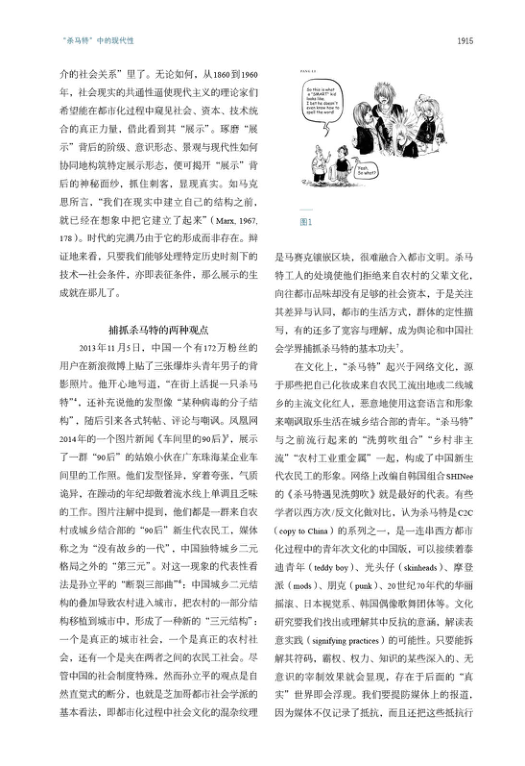
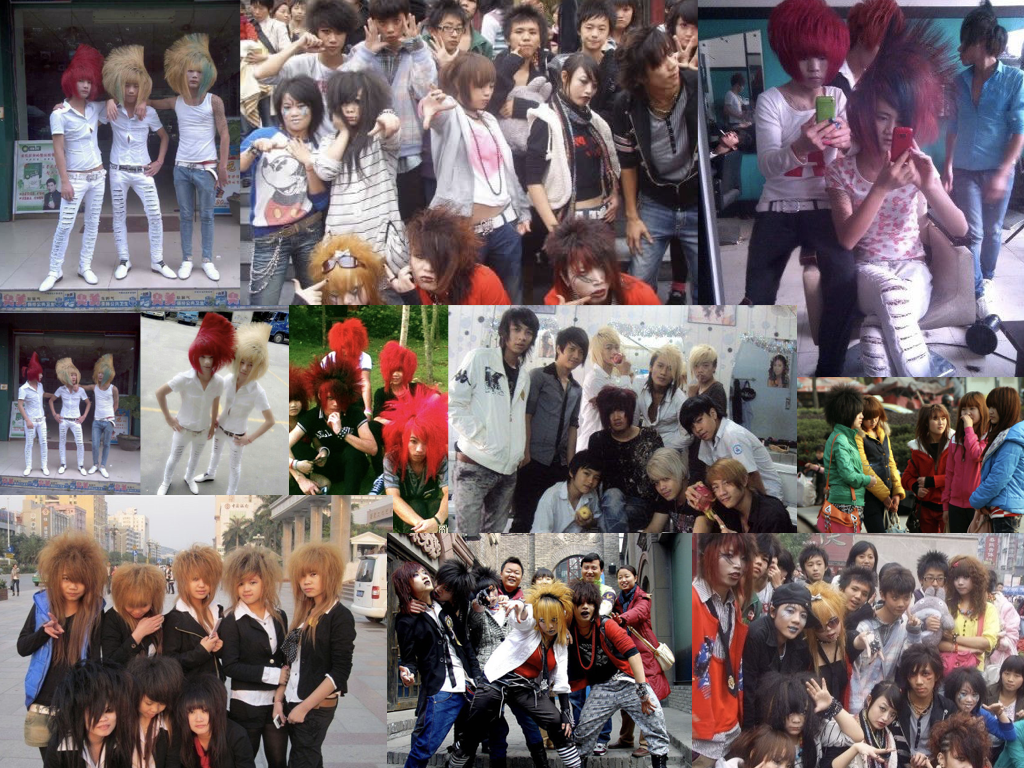
2013年11月5日,中國一個有172萬粉絲的用戶在新浪微網誌上貼了三張爆炸頭青年男子的背影照片。他開心地寫道,“在街上活捉一隻殺馬特”,還補充說他的髮型像“某種病毒的分子結構”,隨後引來各式轉貼,評論與嘲諷。鳳凰網2014年的一個圖片新聞《車間裏的90後》,一羣90後的姑娘小夥在廣東珠海某企業車間裏的工作照,他們髮型怪異,穿着誇張,氣質詭異。躁動的年紀卻做着流水線上單調且乏味的工作。圖片註解中提到,他們都是一羣來自農村或城鄉結合部的“90後”新生代農民工,媒體稱之為”沒有故鄉的一代”,中國獨特城鄉二元格局之外的“第三元”。代表性看法是孫立平的”斷裂三部曲”,中國城鄉二元結構的疊加導致農村進入城市,把農村一部分結構移植到城市中,形成了一種新的“三元結構”:一個是真正的城市社會,一個是真正的農村社會,還有一個是夾在兩者之間的農民工社會。儘管中國製度特殊,然而孫立平的觀點是直覺自然式的斷分,是芝加哥都市社會學派的基本看法,都市過程中社會文化的混雜紋理是馬賽克鑲嵌區塊,很難融合入都市文明。殺馬特工人處境使他們拒絕來自農村的父輩文化,嚮往都市品味卻沒有足夠的社會資本,於是差異與認同,都市的生活方式˙,羣體的定性描寫,有的還多了寬容與理解,成為輿論和中國社會學界捕抓殺馬特的基本功夫。
在文化上,”殺馬特”起興於網絡文化,是那些把自己化妝成來自農民工流出地或二縣城鄉的主流文化紅人,惡意地使用這套語言和形象,用以嘲諷取樂生活在城鄉結合部的青年。與之前流行起來的”洗剪吹組合”、”鄉村非主流”,”農村工業重金屬”一起,構成了中國新生代農民工形象,網絡上改編韓國SHINee組合的〈殺馬特遇見洗剪吹〉是最好的代表。有些學者以西方次/反文化做對比,認為是殺馬特是C2C(copy to China)系列之一,是一連串西方都市過程的中國版青年次文化,可以接續着泰迪青年(teddy boy)、光頭仔(skinheads)、摩登派(mods)、龐克(punk)、七零年代的華麗搖滾,日本視覺系,韓國偶像歌舞團體等。文化研究要我們找出或理解其中反抗的意涵,解讀表意實踐(signifying practices) 的可能性。只要能拆解其符碼,霸權、權力、知識的某些深入的、無意識的宰制效果就會顯影,存在於後面的”真實”世界即會浮現。提防媒體上的報導,因為媒體不僅記錄了抵抗,而且還把這些抵抗行動安置在意義的統治架構內。亞文化被收編為有趣的奇觀,“民間惡魔”,作為低劣羣體的臣服於支配神話的事實。(Hall & Open, 1997, pp. 13-74)。簡單說,在英國伯明翰當代文化研究的脈絡中,抵抗是關鍵字,否則無能對抗當時撒切爾保守主義所倡導的英國性。在優秀的模範生迪克·赫伯迪格手裏,所有的符號都具抵抗意義的,就算女龐克手上刺了納粹標誌只是想引人注目,也是有意義的。(Hall & Jefferson, 1975)《通過儀式的抵抗》一書中,文化是“……這樣一種層面,社會羣體在該層面上發展了一種獨特的體驗形式,賦予其社會以物質的……體驗的表現形式”。如果我們把它作為切入點,那麼,我們會發現,每一種亞文化對“社會原料”的處理方式是各有不同(Hebdige, 1979)。
主體透過儀式(體驗的表現形式),能夠對應到大敘事(象徵與意義的世界),我們只要建構其關連(解碼),找到社會原料物質化的證據就行了。在原料跟表現形式(express form, 馬克思語)間,”處理不同”顯然是展示問題,裏頭沒有必然性,反而充滿意識形態解釋的武斷性。比如說是文化研究建立了龐克,還是相反?無論遠古還是今天,社會文化儀式(體驗表現形式)都嚴格的不得了,但沒有儀式是不能變的,這說明了即便抓住刺客也不能證明什麼。另外,這裏假設了大敘事(象徵與意義)有本源性存在,有一個仍未被組織的”社會原料”在行動者與意義之間。但如果不存在對應關係,編了碼卻無需解碼呢?當我們發現中國殺馬特不能像英國龐克樂團性手槍嘲笑英女王的這麼叛逆又該如何?
OVA版本的殺馬特(網絡空間的殺馬特)
1, 城鄉結合部
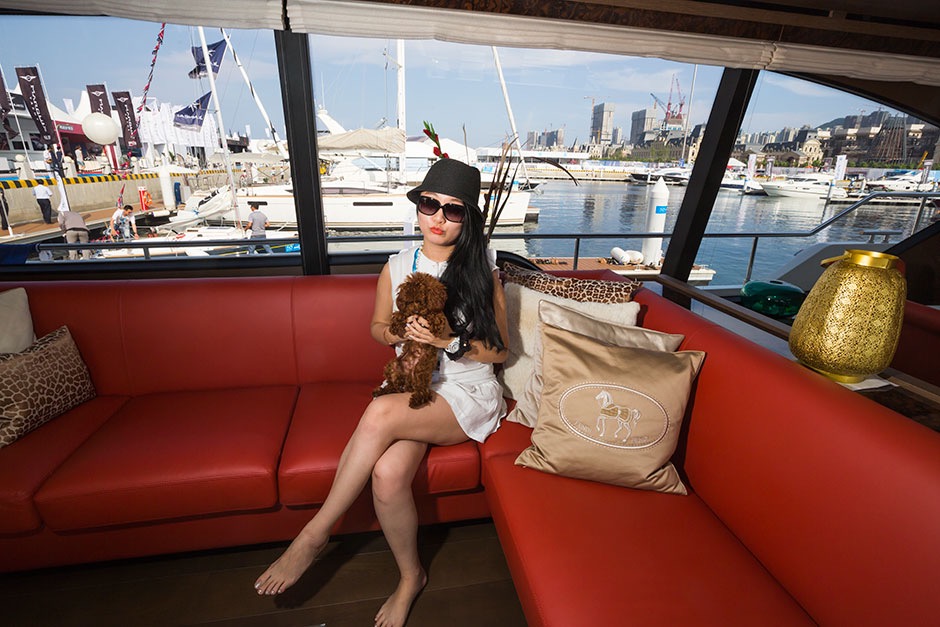
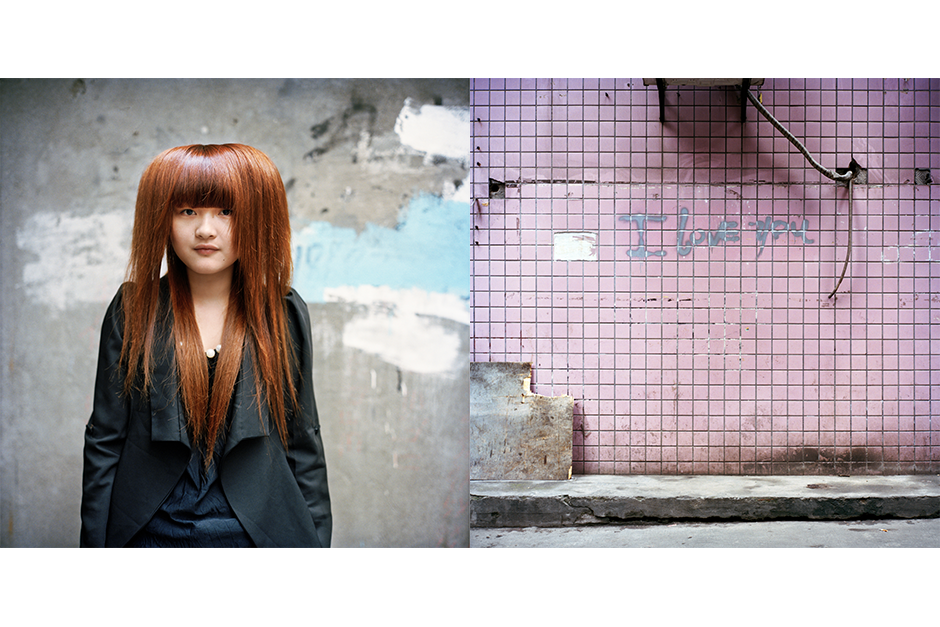
讓我們回到文章一開始引用的兩張當代中國主要的視覺形象:土豪金(bling culure)與殺馬特(smart, shamate)。一人在天津港的豪華私人遊艇裏抱着小狗舒服的坐着,另外一人在髮廊洗頭工作。前者展示優渥,後者房東不讓攝影師進房,只能在租屋處外拍攝,姑娘還在牆上寫上”我愛你”。他們的穿着與出現的空間一樣重要。城市中的青年模仿龐克,也是遜一點的龐克而不會變成殺馬特,上海深圳的老區或北京六環不會是城鄉結合部,只是城中村或城市邊緣。城鄉結合部與生活其中的年輕人同時被指認為”怪胎”,”暫時性社會構成”,不是現代性城市及其文化,只是邁向現代性之路的短暫痛苦,勞力工作與低廉消費的原物料表現出來的病徵。根據聯合國1996年的報告,中國大約有8000萬流動人口,其中大部份在找工作。國家計劃委員會預測五年內,國營企業大約2000萬工人下崗,有1億2000萬人會離開農村,希望在城市找到工作”。中國約在1988年國營企業全面下崗,隨着改革大幅推進市場自由化也符合了此報告內容。現在中國有14億人口近半數住在城市中。 據估計到2025年前還要增加3.5億,其中超過2.5億新增人口將來自農村。中國的特殊體制,集體性國家解放分散的個體化自由市場,藉着壟斷性集中與分散競爭的平衡策略,在短期內可以累積巨大的財富和提升經濟力量。這是階級壟斷式地租,展現在空間上的壟斷式競爭。如果這是痛苦,恐怕不會是短暫的。因為城鄉空間的生產方式—城鄉結合部—有助於統一此種矛盾。
2,中產階級的意識型態
一般說法,土豪金與殺馬特的名字都來自城市裏的小知識青年(屌絲,cock wire, diaosi)的創作。屌絲源於李毅吧的爭吵怒罵語言,被罵的敵手遂以屌絲自稱。屌絲嘲諷髮型誇張,使用便宜山寨機,拙劣模仿的農工人子弟第二代,殺馬特也自成團體,並在網絡社羣自我增生。這是不酷的中國版酷兒(queer)故事。
因為對邁向現代之路有所想像,我們也可以如此解釋,這三個幾乎在同一時間(2012-3)出現的網絡詞彙與團體形象,土豪金,屌絲,殺馬特三者都被不在場的適切的中產階級(decent middle class)的意識形態所區分出來(Bourdieu, 1986)。他們被不在場的集體意識形態所展示。中產階級作為現代主義的中堅分子,中國改革開放新浮現之階級,必須建構出自己的意識形態力量,其表現形式是對他者的否定,而且是雙重否定。對於農民工的第二代,他們否定其社會資本,對於新富階級,他們否定其文化品味,而執行者是他們失敗的胚胎屌絲們。藝術史上類似的是現代藝術家,他們因為不滿於巴結貴族的藝術(bourgeois art),也瞧不起為了工人的藝術(social art),所以只能暫時懸置藝術的意義與內容,強調”為了藝術而藝術”(Bourdieu, 1996)。中產階級是一個空的符徵,沒有準確刻度的量尺,只能透過兩邊的界線移動來決定自身。
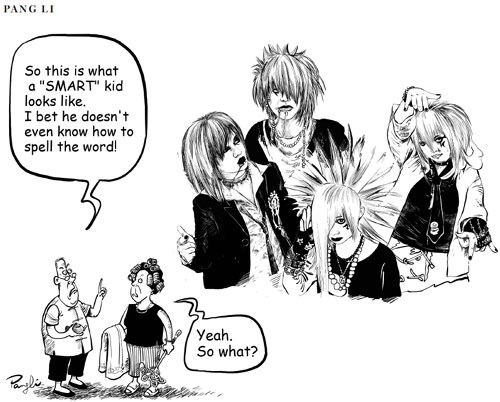
由是,”殺馬特”是被統治的統治者知青對城鄉結合部文化的指認,現代指認未現代化的美學鬥爭,是網絡的,次文化的,空間生產的鬥爭。意義的競逐戰場,是拉圖爾(Bruno Latour)所謂的交引纏繞的實踐(entangling practice)(Latour, 1993)。
3,故事消費資料庫消費
殺馬特猶如動漫的寫實主義。要解釋此種肉身化、物質化的動漫,我們勢必要從赫伯迪格轉到東浩紀深刻的研究成果。東浩紀以”後現代的動物性”來掌握日本御宅族文化的特性與萌之構成,以故事消費結構與資料庫消費結構來區分現代故事與後現代網絡文本(東浩紀, 2015)。日本動漫是從美國山寨而來,因為技術不足,只能以更低階技術有限動畫(limited animation)方式呈現,反而造就風迷全球的日本動漫表現形式。御宅族對日本的執着,並不是成立在傳統上面,而是成立於傳統被消滅以後,戰敗的心靈使得日本巫術與西洋魔術,魔幻與機器人可以混種而生,希望能用美國生產的原料來恢復戰後曾經美好的日本。御宅族文化與網絡原生小說表現的是社會─技術條件轉變。989被認知的御宅族普遍有着”以交換為中心,欠缺深度溝通”的特徵,在有限的資訊空間裏勉強的維持自我形象,且在溝通變得比過去更為淡薄的前提下,一種人為的補償。(東浩紀, 2012)。
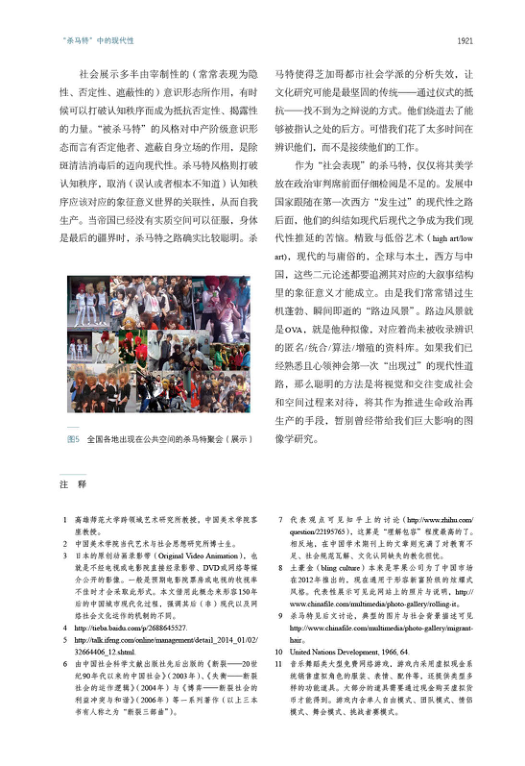
八零九零後的殺馬特是成長於下崗工人與移民大潮相互競爭工作,都市過程最為激烈的時刻。時間晚於御宅族卻享有類似的社會溝通不良,非社會的且孤獨的動物化處理情感方式,更貴的資訊空間成本與更低的資訊流通可能。他們活動在城鄉結合部的火車站,小賣店,髮廊,工廠,也會集體出現在公共場合鬥舞,在火車站與廣場上面對面肯定彼此。
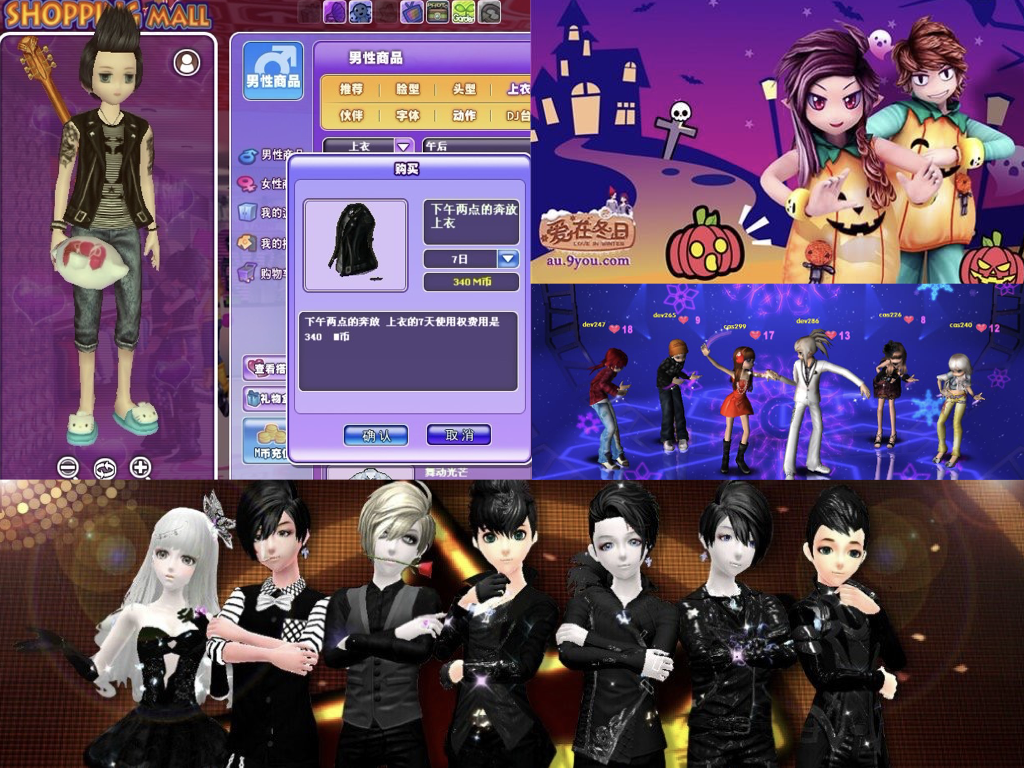
網吧為他們提供了四毛錢一小時的娛樂,在這個唯一能夠消費得起的休閒空間裏,他們上QQ刷閃鑽(在線時間越長等級就會上升),裝扮QQ空間(花錢設計網頁)成為紅人,閃鑽的級別,QQ裝扮的級別,提供了現實裏別無選擇但虛擬空間可以升級的階級框架。透過勁舞團、QQ炫舞等遊戲,他們成為鍵盤上的音樂龐克,鄉村非主流因網絡交往晉升為更聚核的殺馬特族羣,如”殺馬特葬愛家族”,”殘血貴族”等族系建構外敵鬥爭,用火星文創造自己家族徽章(他們的id都會出現家族符號)。他們所沉浸的網遊就是他們實踐網絡身分,提高認同,交友與奮鬥的教科書和創意工程,幾乎是他們人生能夠成名,能與之奮鬥的唯一機會。玩遊戲就是他們的人生。山寨手機拯救他們免於數位鴻溝脫線(unplug)。這是一個網絡自我增生的社會展示系統,透過”儀式”打造了超級社交機器(super social apparatus),殺馬特存在其中也自我製造。換句話說,他們並非在文化層面上去體驗的表現形式,他們就是社會物質原料及特殊體驗形式。他們生產自己,是奈格里抱以希望的生命政治的自我生產(Biopolitical production)(Hardt & Antonio Negri, 2000),類似的情形同時發生在富士康廠,科技產業鏈中組裝線的手工勞動者,被訊息化的新勞工階級身上(Qiu, 2009, 2013)。
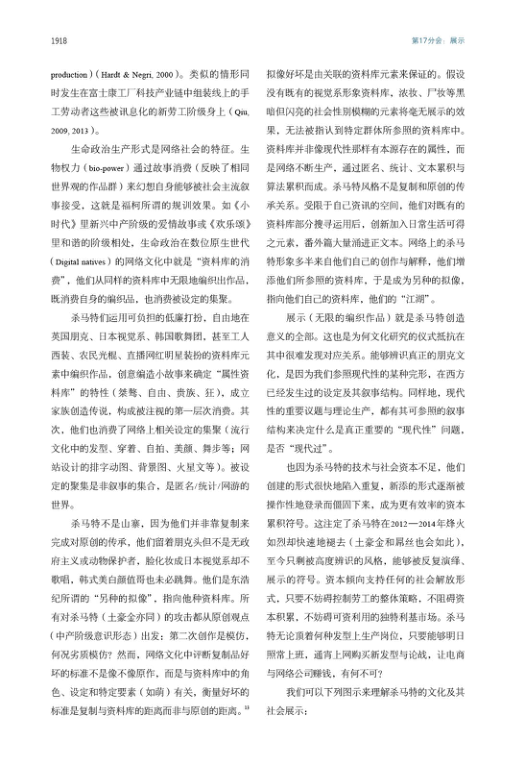
生命政治生產形式是網絡社會的特徵。如果生物權力(bio-power)是透過故事消費(反應了相同世界觀的作品羣)來幻想自身能夠被社會主流敘事接受,是傅柯的規訓效果。如《小時代》裏新興中產階級的愛情故事或《歡樂頌》裏和諧的階級相處。那生命政治在數位原生世代(Digital natives)的網絡文化中就是”資料庫的消費”,他們從同樣的資料庫中無限的編織出作品,既消費自身的編織品,也消費設定的集聚。
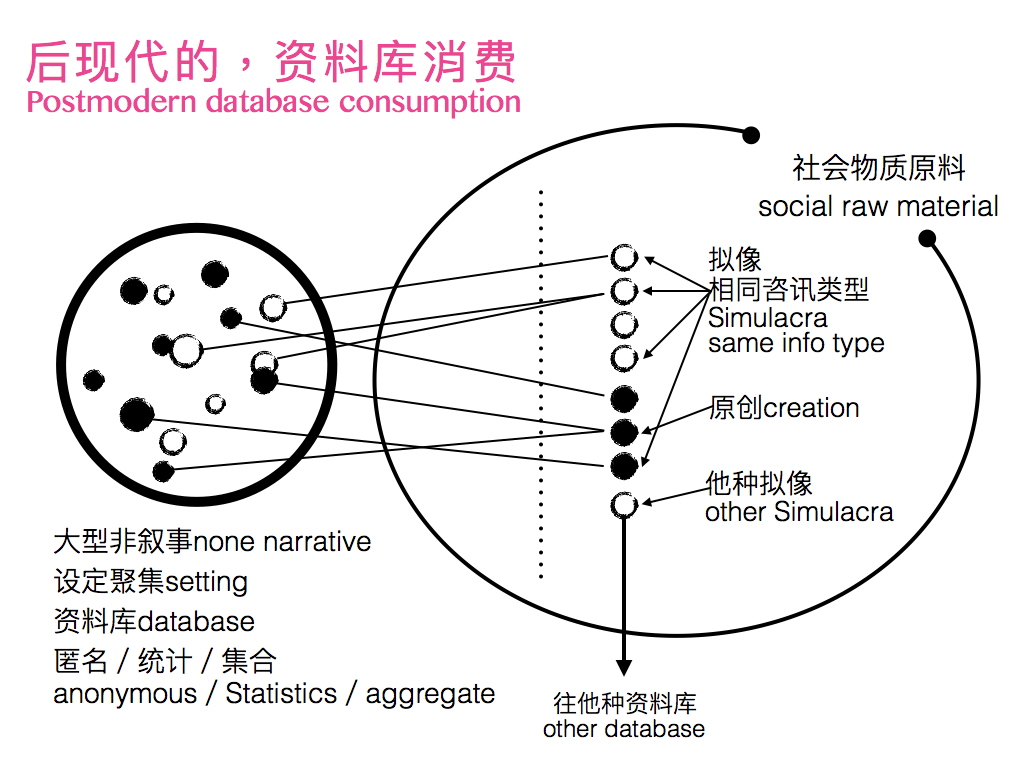
殺馬特們運用可負擔的低廉打扮,自由的在英國龐克、日本視覺系,韓國歌舞團、甚至工人西裝,農民光棍,直播網紅明星裝扮的資料庫元素中編織作品,創意編造小故事來確定”屬性資料庫”的特性(桀驁,自由,貴族,狂),成立家族創造傳說,構成被注視第一層次消費。其次,他們也消費了網絡上相關設定的集聚(流行文化中有關髮型,穿着,自拍,美顏,舞步等;網站設計的排字動圖,背景圖,火星文等)。設定的聚集是非敘事的集合,是匿名/統計/網遊的世界。
殺馬特不是山寨,因為他們並非複製來完成原創的傳承,他們留着龐克頭但不是無政府主義或動物保護者,臉妝成日本視覺系卻不歌唱,韓式美白顏值哥也未必跳舞。他們是東浩紀所謂的”另種的擬像”,指向他種資料庫。所有對殺馬特(土豪金亦同)的攻擊都是從原創觀點(中產階級意識型態)出發,第二次創作是模仿,何況劣質模仿?然而,網絡文化中評斷複製品好壞的不是像不像原作,而是與資料庫中的角色,設定和特定(如萌)要素有關,衡量好壞的是複製與資料庫的距離而非與原創的距離。擬像好壞是由關連的資料庫元素來保證的。假設沒有既有的視覺系形象資料庫,濃妝,屍妝,黑暗但閃亮,社會性別模糊元素,將毫無展示的效果,無法被指認到特定羣體所參照的資料庫。資料庫並非現代性那種有本源存在的屬性,而是網絡不斷生產,通過匿名,統計,文本累積與算法累積而成。殺馬特風格,不是複製和原創的傳承關係,受限於自己資訊空間,他們對既有的資料庫部分搜尋運用後,創新加入日常生活可得之元素,番外篇大量湧進正文本。網路上的殺馬特形象多半來自他們自己的創作與解釋,他們增添他們所參照的資料庫,於是成為另種的擬像,指向他們自己的資料庫,他們的”江湖”。
展示(無限的編織作品)就是殺馬特創造意義的全部。這也是為何文化研究的儀式抵抗在其中很難發現對應關係。能夠辨識真正的龐克文化,是因為我們參照現代性某種完形,在西方已經發生過的設定及其敘事結構。同樣的,對現代性重要議題與理論生產,都有其參照的敘事結構來決定什麼是真正的重要的”現代性”問題,是否”現代過”。
也因為殺馬特的技術與社會資本不足,很快地他們創建的形式陷入重複,新添的形式逐漸被操作性的登錄而僵固下來,成為更有效率的資本累積符號。這注定了殺馬特在2012─2014烽火如烈卻快速的褪去的原因(土豪金和屌絲也會如此),至今只剩被高度辨識的風格,能夠被反覆演繹,展示的符號。資本傾向支持任何的社會解放形式,只要不妨礙控制勞工的整體策略,不阻礙資本積累,妨礙可資利用的獨特利基市場。殺馬特無論頂着何種髮型上生產崗位,只要能夠明日照常上班,通宵上網購買新發型與論戰,讓電商與網絡公司賺錢,有何不可?
我們可以下列圖示來理解殺馬特的文化及其社會展示:
4,形式吸納
殺馬特圖像向公衆展示的過程很能說明資本主義的形式吸納(formal subsumption)。剛開始,殺馬特藉故事性組圖引爆網絡討論,有理髮店中的殺馬特,春運火車站返鄉的殺馬特,公共廣場聚會合照的殺馬特,網吧視頻截圖中的殺馬特,還有撰文殺馬特傳奇的家族人物風雲榜,高度關注的是髮型與反萌要素。第二階段是淘寶出現一批殺馬特風格假髮配飾店,更有殺馬特家族簽名風格製作設計服務網,將殺馬特表皮造型商品化,通過快手app和直播軟件借題發揮創造網紅大號。2014年之後殺馬特羣體真身退溫,外部主流文化進入了對其圍勦與再次演繹販賣的狂歡。
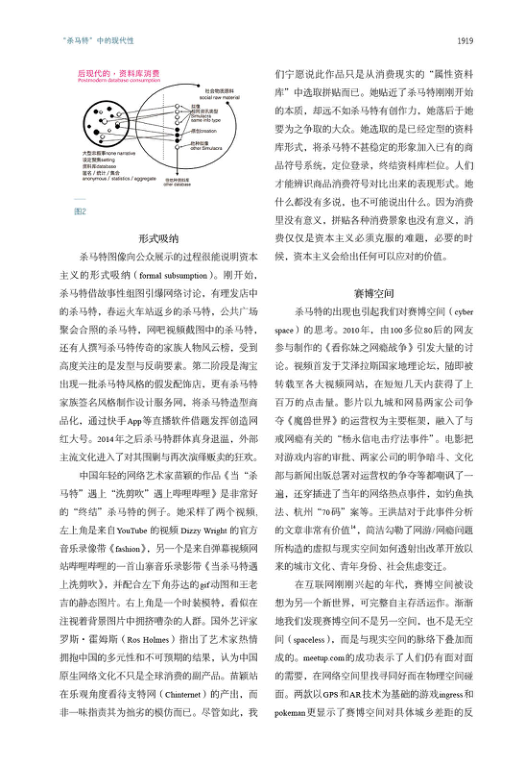
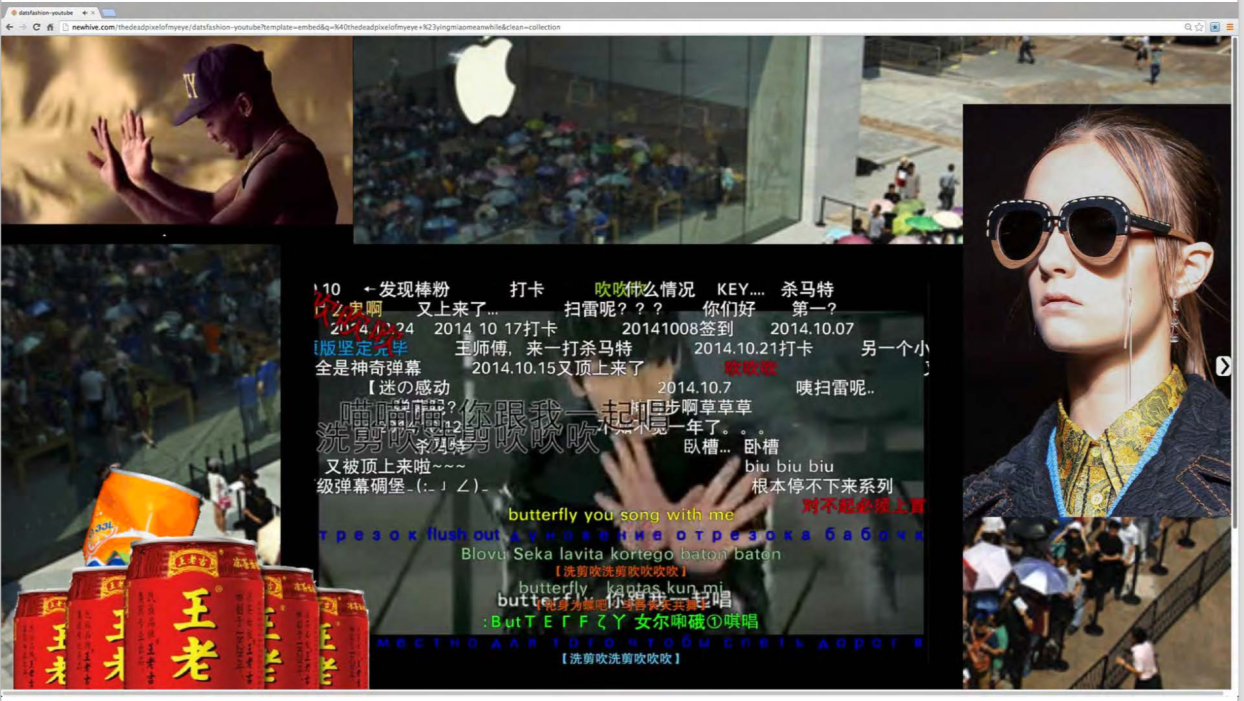
中國年輕的網絡藝術家苗穎的作品《當“殺馬特”遇上“洗剪吹”遇上嗶哩嗶哩》是非常好的”終結”殺馬特的例子。她採樣了兩個視頻(左上角是來自YouTube 的視頻 Dizzy Wright 的官方音樂錄像帶 fashion,另一個來自彈幕視頻網站嗶哩嗶哩的一首山寨音樂錄影帶《當殺馬特遇上洗剪吹》,並配合左下角是芬達的gif動圖和王老吉的靜態圖片。右上角是一個時裝模特,神情看似在注視着背景圖片中擁擠嘈雜的人羣。國外藝評家ROS HOLMES 指出藝術家熱情擁抱中國的多元性和不可預期的結果,認為中國原生網絡文化不僅只是全球消費的副產品。苗穎站在樂觀態度看待支特網(Chinternet)的產出,而非一昧指責為拙劣的模仿和荒謬而已。儘管如此,我們更寧願說此作品只是從消費現實的“屬性資料庫”中選取拼貼而已。她貼近了殺馬特剛剛開始的本質,卻遠不如殺馬特有創作力,她落後於她要為之爭取的大衆。她選取的是已經被定型的資料庫形式,將殺馬特不甚穩定的形象加入已有的商品符徵系統,定位登錄,終結資料庫欄位。人們才能辨識商品消費符號對比出來的表現形式。她什麼都沒有多說,也不可能說出什麼。因為消費裏頭沒有意義,拼貼各種消費景象也沒有意義,消費僅僅是資本主義必須克服的難題,必要的時候,資本主義會給出任何可以應對的價值。
5,賽博空間
殺馬特的出現也引起我們對賽博空間(cyber space)的思考。2010年,由一百多位80後的網友參與制作的《看你妹之網癮戰爭》引發大量的討論。視頻首發於艾澤拉斯國家地理論壇,隨後即被轉載至各大視頻網站,在短短几天內獲得了上百萬的點擊量。影片以九城和網易兩家公司爭奪《魔獸世界》的運營權為主要框架,融入了與戒網癮有關的“楊永信電擊療法事件”。電影把對遊戲內容的審批、兩家公司的明爭暗鬥、文化部與新聞出版總署對運營權的爭奪等都嘲諷了一遍,還穿插了當年的網絡熱點事件,如釣魚執法,杭州”70碼”案等。王洪喆對於此事件分析的文章非常有價值,簡潔勾勒了以網遊/網癮問題所構造的虛擬與現實空間,如何透射出改革開放以來城市文化、青年身份、社會焦慮變遷。
在互連網剛剛興起的年代,賽伯空間(cyber space)被設想為另一個新世界,可完整自主存活運作。漸漸的我們發現賽伯空間不是另一空間,也不是無空間(spaceless),而是與現實空間的脈絡下疊加而成的。meetup.com的成功表示了人們仍有面對面的需要,在網絡空間裏找尋同好而在物理空間碰面。兩款以GPS和AR技術為基礎的ingress和pokeman遊戲更顯示了賽伯空間反映了具體城鄉差距。Clay Shirky影響廣泛的書中清楚提及透過網路確實有建立社會新資本的可能,但這與現實需求息息相關。網絡可以滿足特殊需求,少數癖好,堅持己念者找到同好,也為少數偏激意識型態分子找到宣傳與認同管道(如支持厭食和ISIS)。對照Clay Shirky書中段落與《看你妹之網癮戰爭》裏片中最高潮的一段網民心聲,會發現如此的契合,這也能解釋殺馬特的現象。殺馬特是在網絡與城鄉結合部裏的空間生產中誕生的。網絡建造了更為堅固的認同,填補了原本社會在都市過程中失去的功能,從而使得城鄉結合部可以繼續矛盾統一維持下去。
過去要人們聚集在一起非常難,而要讓已形成的羣體瓦解卻很容易。而現在,要集合潛在的羣體很簡單,而且羣體一旦集合在一起了,在面對大環境的冷漠甚至是直接的反對時非常團結堅定。”(Shirky, 2010, p. 187)
在這一年裏,我和其他熱愛這個遊戲的人一樣 認真地擠着公交車上班 認真地消費着各式各樣的食品 不管裏面有沒有不認識的化學成分 我們沒有因為工資微薄而抱怨過 沒有因為你們拿着從我微薄工資里扣的稅 住着聯體排屋而心理失衡過 在這一年裏,我和其他熱愛這個遊戲的人一樣 為水災,為地震而痛心哭泣 為載人航天,為奧運會而加油喝彩 我們打心眼裏,就不想我們在任何一個方面 落後於這個世界上的任何一個民族 而這一年裏,卻因為你們這些人 我們遲遲不能與地球上其它國家的玩家一起,一決高下 (引自《看你妹之網癮戰爭》)
6,邁向現代的殺馬特(聰明)之路
展示意味著有人有意的,系統地組織材料公佈於公共領域,或作為機制或制度代理人,實行有目的公衆宣傳、溝通、意識形態的說服。是左右兩個世界都熟悉的媒介操作,也是文化霸權的核心鬥爭。羣體視覺生產過程在本文中稱為社會展示(social display)的原因,是因為並非有人收集特定的物件與圖片來展示給公衆,而是透過羣體相互指派以及自我區分,自我增殖生產而形成。在網絡空間上,社會展示有親密的羣體支持,如貼吧的對戰而分敵我,臉書和推特微博上贊與轉貼,論壇上的狂頂,家族的動員等。在實體空間中,社會展示則是差異地理學的視覺特徵。
社會展示多半由宰制性的(常常表現為隱性,否定性,遮蔽性)意識型態所作用,有時候可以打破認知秩序而成為抵抗否定性,揭露性的力量。”被殺馬特”的風格是中產階級意識型態否定他者,遮蔽自身立場的作用,除斑清潔消毒後的邁向現代性。殺馬特風格則是打破認知秩序,取消(誤認或者根本不知道)認知秩序應該對應的象徵意義世界的關聯性,從而自我生產。當帝國已經沒有實質空間可以征服,身體是最後的疆界時,殺馬特之路確實比較聰明。殺馬特使得芝加哥都市社會學派的分析失效,讓文化研究可能是最堅固的─透過儀式的抵抗─的傳統找不到為之辯說的方式。他們繞道去了能夠被指認之處的後方。可惜我們花了太多時間在辨識他們,而不是接續他們的工作。
作為“社會表現”的殺馬特,僅僅將其美學放在政治審判席前面仔細檢閱是不足的。發展中國家跟隨在第一次西方”發生過”的現代性之路後面,他們的糾結如現代後現代之爭成為我們現代性推延的苦惱。精緻與低俗藝術(high art/low art),現代的與庸俗的,全球與本土,西方與中國,這些二元論述都要追溯其對應的大敘事結構裏的象徵意義才能成立。由是我們常常錯過生機蓬勃,瞬間急逝的“路邊風景”。路邊風景就是OVA,就是他種擬像,對應着尚未被收錄辨識匿名/統合/算法/增殖的資料庫。如果我們已經熟悉且心領神會第一次”出現過”的現代性道路,那麼聰明的方法是將視覺和交往變成社會和空間過程來對待,作為推進生命政治再生產的,暫別曾經帶給我們巨大圖像學研究之影響。
English
Smart to Modernity: A Social Display Within the Production of Urban-Rural Space (draft)
Huang Sun-Quan, Liu Yi-Hong
In art, above all in architecture and interior decoration, bad taste had never set the fashion so much as now. For the newly rich, who are wealthy enough to want to shine, but not old enough to shine without ostentation, nothing is too expensive or pompous.
— > — War on Internet Addiction, The Social History of Art, vol. 4, p. 36
The spectacle mentioned above is one which most Chinese are familiar with, but in fact isn't a portrayal of consumer tendencies practiced by China's nouveau riche. It's art historian Arnold Hauser describing the new appearance of the bourgeois in Paris during the second empire period of 1860. One hundred and fifty years later Paris, the symptom of Capital of modernity is taking center stage in Chinese cities in the form of OVA (original video animation): the re-planning of cities, land-finance expansion, the diminishing of historical streets and traditional stores, the rise of flaneur and petty bourgeois. The growing tension between immigrants and citizens, poor working conditions for the Working Class, and a flourishing art scene. To say it uses the form of OVA implies that because the west has already partaken in the process of modernization, development in other regions of the same sort is not all that novel. As was stated by Stuart Hall so long ago with "The west and the rest".
During the first period of modernization there was ample discourse surrounding cities, modernity as well as display, Benjamin's writings regarding Paris during the 1860's state that Francois-Marie Charles Fourier's utopia was possible because of the advancements made in technology (at the time man already possessed the ability to bend large steel beams and produce large sheets of glass ideal for display). It's possible to imagine the triforium street meeting the societal and technological development needs at the time. In the end turning each civilization into a commodity to be displayed at the World expo, thus the city itself becomes fetishism (Benjamin & Tiedemann, 1999). In David Harvey's writings Capitalism has created a spacial mode capable of self accumulation, and financial land capital has replaced the Sacré-Cœur once a symbol of revolution. Capitalist cities are an attempt to make Capitalism seem like the epitome of human civilization (Harvey, 2003). In Clark's writings the rise of impressionism also gave rise to a social group who had "the right to leisure" and were capable of enjoying life, a theme which was reflected in their paintings. This reflects the class consciousness and is a symbol of specific historical conditions present at that time.
Bourdieu writes about the way in which modern art achieved it's autonomous domain and the moment in which esthetic ideas emerged victorious. Later Veblen writes about the flamboyant consumer class and in all its wealth and leisure in The Theory of the Leisure Class. Thus signifying the distinction between High and low citizens. Soon after Simmel's two classic works were published (Die Großstädte und das Geistesleben) and then on fashion, making up for the later appearance off the modern city. The state of mind at the time was one that citizens of the metropolis must stand together (same) while at the same time being individuals (different), the trend at the time was one in which the Middle Class copied the clothing worn by the upper class. These topics need no theoretical discourse to be understood by todays Chinese audience.
At the end of the 19th century in a mere fifty year period, city, spectacle, capital, class, ideology, and modernism are on display everywhere and have become a part of everything we are accustomed to. Before Debord's The Society of the Spectacle we had long been living in "social relationships that were mediated by images".
That being said between 1860 and 1960 the universality of the social reality forced modernist theorists to look to the intense unfolding of the city with hopes of catching a glimpse of the comprehensive force of society, capital, and technology. Behind such a display is the way in which class, ideology, spectacle, and modernity construct a specific form of display. By unveiling the veil of display and grabbing hold of the assassin does reality present itself. As Karl Marx once said "the architect raises his structure in imagination before he erects it in reality". The success of a time period is due to its formation not to its existence. From a dialectical standpoint as long as we are able to deal with representation conditions ─ technology and social conditions ─ at its specific moment, then the formation of display can be found.
Not only have the reports by the media recorded resistance but they have done so in a way it may deemed manful but they ruling structure. Thus subculture has been transformed into an interesting spectacle a "folk demon" which claims allegiance to substandard groups functioning as part of a factual myth (Hall & Open, 1997, pp. 13-74). Put plain the term "resistance" is a keyword at Birmingham's Centre for Contemporary Culture Studies, the reason being without resistance there would be no challenge to the so called "English-ness" advocated by Margaret Hilda Thatcher and the conservatives of her day. In the excellent words of Hebdige "all symbols are a form of resistance, even the female Punk who tattoos a nazi swastika on her hand to attract attention shares this trait". In the book Resistance Through Rituals: Youth Subcultures in Post-War Britain culture is described as that which social groups who have developed a unique form of expression in which society then materializes these forms of expression. That being said if we enter at that point then we will find that the means in which every subculture handles social material is different (Hebdige, 1979).
Through ritual the subject (expressed form of experience) is capable of corresponding to the grand-narrative (symbol and meaning) all we have to do is make the connection (de-code) and find the evidence of raw social material. In the realm of material and expressed forms the "difference in handling" is clearly an issue of "display"; there's nothing "inevitable" here, instead is an arbitrary interpretation that's packed with ideology. For instance was it cultural study which gave rise to Punk? or was it the other way around? Cultural rituals of Ancient and contemporary alike are all extremely strictly but all of them can be done away with, even if we catch the assassin it doesn't prove anything. Further more the grand-narrative addressed here (symbol and meaning) has its empirical backing and original source, there's also social raw material which is yet to be organized and resides between the activists and meaning itself. But in fact there is no corresponding connection, so is there really a need to decipher the encrypted code? When we realize the smart of China aren't able to laugh at the Queen of England like The Sex Pistols, what are we to do?
Grasping two points of view regarding the "smart" (shamate)
On November 5th 2013 a Chinese user with over 1,720,000 fans added three photos to their profile on Sina which depicted a young man from behind with "poofy" hair. He wrote happily "I caught a live smart" then adding "his hair resembles that of some sort of virus" later it went viral in many different forms, with ridiculing comments and critiques. An image posted on the news site "ifeng" titled "the 90's generation of the workshop" depicts a group of boys and girls at some enterprises workshop in Zhuhai, canton. With their hair strange, attire over the top, and obscure temperament, at an age of commotion they work a tedious monotonous job. In the image's explanation it states they are a group of migrant workers that hail from the countryside or suburban areas who were born in the 90's. The media referred to them as the generation without a hometown, The third component which exists separate to China's unique urban/rural structure. The most prominent opinion of the field is that of Sun Liping's (孫立平) "Fractured Trilogy" in which the dualistic nature of China's rural/urban make-up is cramped together causing the permeation of the village into the city and vice versa, thus forming a new structure called the "ternary structure". On the one hand you have the real urban society and on the other you have the rural one, where they meet stuck in the middle is that of the migrant workers. As particular as the Chinese system is Sun Liping's stance is one that is shared with most of the Chicago School of Sociology. That is through the process of urbanization the city from a mixed grain like structure resembling that of a mosaic with each area not easily with the city's culture. The position the "smart" workers are in as workers causes them to refuse the cultural influence from their parents in the countryside. They long for the good taste of the citizens but lack the capital required. Thus difference and approval if in the city, description of community determinacy, even tolerance and understanding have become the key points of Chinese sociologists attempting to grasp the "smart".
From the cultural perspective "smart" took shape in net-culture, people used make up and dressed themselves up like a Migrant Worker or someone who was an internet sensation from a second tier urban/rural region. By using these forms of speech and appearance maliciously to mock and jeer at people who hail from the regions where cities and countrysides meet. The migrant workers appearance is represented in bands and groups like the popular HKT (洗剪吹, hair wash, cut, blow), village alternative, and village industrial heavy metal. The alteration made the South Korean band Shinee's "smart meets HKT" is the most well-known example. There are some scholars who have compared the trends to western subculture counterparts, claiming "smart" belongs to China's C2C series (Copy to China). A concession of Chinese young subculture modeled after its western counterpart can be seen a continuation of teddy boys, skinheads, mods, Punks, glam rock, Japanese Visual Kei, as well as idolized Korean dance groups. Cultural research requires us to find the implication of resistance and decipher its possible signifying practices by disassembling the embedded code the unconscious result of hegemony, power, and knowledge make visible that which is the "real".
In the book Resistance Through Rituals: Youth Subcultures in Post-War Britain culture is described as that which social groups who have developed a unique form of expression in which society then materializes these forms of expression. That being said if we enter at that point then we will find that the means in which every subculture handles social material is different.
The OVA version of "smart" (smart in network space)
1. Urban-Rural Fringe
Now think back on the two imaged ideology of contemporary Chinese mentioned previously: bling culture and shamate; one coddling their pooch aboard a luxurious private yacht, the other a lowly hairwasher in a beauty parlor. The former flaunts their sumptuous lifestyle, whilst the ban of the latter's landlord relocates their photo shoots to obscure spots where the girl writes I love you on the wall. What their attire and where their show is critical joint. A city dweller trying for a Punk look will be a punky which lacking of Punk's essential, nor be the shamate. The old districts of Shenzhen or the sixth ring of Beijing are urban villages and city fringes nor urban-rural fringe, is all - those living on the border are regarded as freaks and temps. It's not the modern urban culture. It's a growing pain of modernization. It's a symptom of cheap social raw material and cheap labor.
According to a 1996 UN report, 80 million Chinese are members of the country's "floating population", the majority of which are in search of employment; the State Planning Committee estimates that within five years, state-owned entreprises will have 20 million posts less while 120 million villagers swell the ranks of the (potential) urban workforce, prediction which the market liberalization brought about by the bankruptcy of the state-owned entreprise has only served to support. Currently half of China's 1.4 billion population are city dwellers, and the number is expected to go up by another 350 million, seventy percent of which hail from rural areas. The highly individualized free market under a collective state and the counterbalance between monopolistic concentration of resources and scattered competition that characterize China's unique economic system make it possible to accumulate vast amounts of wealth and enhance the economy's performance within a short period. This is class-dictated monopoly rent, monopolistic competition between geographical units. If this is pain, it is, alas, likely to last. Due to the nature of the urban and rural production of space, the urban-rural fringe exist in the contradictory unity with competition.
2. Middle Class Ideology
Normally, terms like bling culture and shamate are coined by young, city slicker intellectuals (diao si). Opponents of Li Yi net-forum netizens, under the onslaught of virulent arguments, gradually adopted the term diaosi as denomination. The diaosi mocks over-the-top hairstyles, uses cheap knock-off phones and plays unconvincingly at being the offspring of blue-collar parents. The shamate(s) also bands together, flourishing on the Internet. This is the story of the uncool Chinese Queer.
One could also, having meditated on the path towards modernity, speculate that these three practically contemporary "types" (bling culture, shamate and diaosi), were defined by the ideology of the absent, decent Middle Class (Bourdieu, 1986) and they are manifested by this same ideology. As the backbone of modernism and the children of China's reform period, the Middle Class is obligated to assert the power of its ideology by naysaying the Other, and in double negatives. They deny the social capital of the labourer's descendants and the taste of the nouveau riche, and the ones who mete out this disdain are their disappointing progeny, the diaosi. The brotherhoods (I'm sorry, that's a terrible word) of art history are exclusively modern, their members drawn together by their disregard for bourgeois art and social art alike and left with no alternative but to temporarily deny the meaning and form of art, crying only art for art (Bourdieu, 1996). The Middle Class is a meaningless symbol, a ruler without scales, its identity defined solely by the weight-shifting of its two counterparts.
Therefore, 'Smart' could be defined as, an identity of the youth stratum from urban fringe culture, whom are socially dominated while being its own cultural dominators; a yet modernized aesthetic struggles to be identified as 'modern'; a network-based and sub-cultural struggle, which reflects in the production of space. In such arena of meanings legitimation, it could be refer to as, the so-called 'entangling practice' by Bruno Latour (Latour, 1993).
3. Narrative Consumption vs Database Consumption
'Smart' has an appearance as the realization of manga (usually associated with the so-called cos-play fashion). In order to discern such materialization and bodification, we are bound to sway from Dick Hebdige to Hiroki Azuma profound research on Japanese sub-cultures. Hiroki Azuma grasps the characteristic Japanese Otaku culture and the formation of 'Kawaii (cute)' with the concept of 'Post-modern animal', which leads to a socio-structural differentiation of Narrative Consumption Structure and Database Consumption Structure, to distinguish between modern narratives and Postmodern web-based context (Hiroki Azuma, 2015). Japanese anime was originated from the United States, with the lack of technology, it presents itself as a Limited Animation. Such manifestation in return has created a global obsession on Japanese anime. Dedicated to redefine a 'Japanese Culture', Otaku was not built upon the groundwork of the traditions, but rather on the destruction of traditions. With the defeat of World-War-II, hopes were casted upon the United States production of raw materials to restore the once beautiful postwar Japan, where Western magic and Japanese witchcraft, magic and robot can be blurred and born into a new species. Otaku culture and network-based native novel, reflects a manifestation of a transformation socio-technical conditions, where 'Otaku' was coined and defined as a sub-culture in 1989, with the characteristics of 'exchange based and lack of deep communication'; such attempt of barely maintain its self-identification in the limited informatic space, could be seen as an artificial compensation within the thin and speedy communicative social premise (Hiroki Azuma, 2012).
The 80s and 90s generation of 'Smart' was born out of a period of radical urbanization, where both laid-off workers of stated-own companies and inter-state immigrants were competing for work. Having its later arrival compared to Otaku, nevertheless, 'Smart' shared similarities such as, adverse social communication, non-social solitary animal in regards to emotions and sentiments, the controversial conditions of the ever-more expensive cost of informatic space and the ever-lower flow of informatic exchange possible. They are found amongst the spaces of urban fringes, amidst train station and shops, hair salons and factories, occasionally appeared as a collective in break-dance battle in a square, or appreciates and affirms each other in railway stations and public squares.
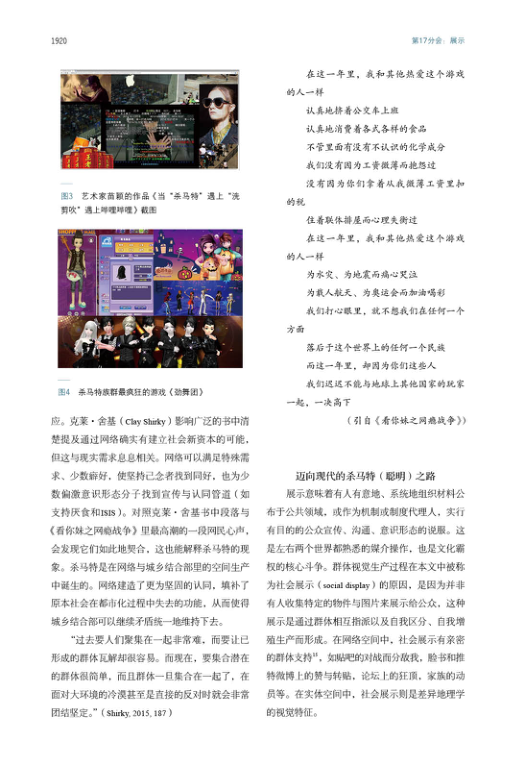
Internet cafes offer them with four-cents hourly rate of cheap leisure opportunities, in this one and only affordable leisure space (as oppose to chilling on a yacht with a Golden Apple Mobile hunting Tao-Bao treasures), they escaped the social reality and became existential through swiping on QQ, playing Jewels (as oppose to games which the longer you play the higher the level you proclaimed), decorate their QQ dresses (as oppose to spending money on designing web pages), become internet-celebrities; the level of Jewels and QQ dresses, provides a virtual reality space where rising up from its own stratification is possible within their fix social stratum. Through the game Audition Online, they become Punk musicians, organizations such as the 'Smart Family', 'Smart-Aristocracy' and 'Smart-er' to form family kinship and social solidarity against contest with foreign enemies; using Martian scripture as their emblem (they the internet IDs often appear with such emblem). They are immersed in games ('Audition Online' is a good example), where they practice their network identity, improve social image, cooperate on projects while building their social relations; over-night fame is almost possible, and becomes the only motivation to strive for. Their game is their life. Copy-left smartphones to save them from the digital cliff and being unpluged from the network, which reflects through the rapid uprising of applications such as Kuaibo and Kuaishou from high-usages in second-tier cities. This is a social media system of self-proliferating network, a super social apparatus was created through 'ceremony', the presence of which Smart self-fabricated its own image. In other words, they are not a form of cultural manifestation, but the very ingredients of society and its form of experience itself. They produce their own, which is the key Antonio Negri saw as ability of Biopolitical production (Hardt & Negri, 2000). The similar situation could be discerned from the Foxconn event, which happens precisely on the up-rising manual laborers from technological industry assembly line, new Working Class who are informationalised (Qiu, 2009, 2013).
The form of bio-political production is a characteristic of the Network Society. If by selling a story bio-power is a means of imagining a narrative in which oneself is accepted by the mainstream culture than; that is thereby Michel Foucault's result of discipline. Like the love story in Tiny Times which depicts an up and coming Middle Class love story, or the harmonious interaction between classes in Ode to Joy. Bio politics during the digital native era of net culture is the consumption of data bases, even in the inter woven product of self consumption, it set up for the assembly of consumption.
The Smart make use of attire they can afford, English Punk, Japanese visual kei, Korean dance teams, Working Class suits hoodlums and internet sensations are all part of the database which is used to create. Creating stories which embody their characteristics (nobility, freedom, madness) are all part of the "legend of the noble family". And therefore can be seen as the first degree of consumption. Apart from that they have also taken part in the consumption of assembly settings on the internet (hairstyles found in pop culture, clothing, makeup, dances, textual formats, backgrounds, handwriting, web gifs etc.) They choose to gather in non-narrative settings a world of anonymousness/statistics/and game.
Smart is not shanzhai because they are not copying, they have Punk hair but aren't anarchists or animal rights activists, they do their make up like the visual kei but can't sing, they put on makeup like the Korean groups but can't dance. They are what Hiroki Azuma calls the "other simulation" pointing towards other databases. All of the insults towards "smart" (and the tuhao as well) a justified upon the basis of originality (middle-class ideology) as if the "second" creation is a copy and a lowly one at that. Furthermore, the criteria for critiquing a copy on the internet isn't based on whether it resembles the original but it's role is that of the database. It is the distance between a copy and the database rather than the copy and original that become the setting and the specific constituents of quality. Simulacra is guaranteed by relating the database. If there weren't any visual databases, make-up, dark and shiny, ambiguous societal elements, then the final result would lack "display". The database would therefore lack its identity for which a specific group could reference. Note that the database is not one of modernity in it that it lacks a single original attribute, it is instead made up of the continuous accumulation and production of anonymous statistics texts and algorithms all of which exist in the net. Free from ones existing surroundings the smart style is not one which is copied and pasted or one that is even original, rather the smart creatively utilizes that which they have found in databases which they then add to the main text. The appearances of the "smart" are their own creations and explanations, they add their sources of reference (databases) and become the other simulation. In turn calling attention to their "realm".
Display (limitless creation) is the smart's sole purpose of creation, this is the main hindrance in discovering the corresponding relation of ritual resistance. Our familiarity of Punk is based of our access to a form of modernity which has already taken shape, a circumstance which has already taken place in the west as part of the structural narrative. Equally important is the production of theory and discussion for they present a point of structural reference a justification of whether or not one has "been modern".
Due to the Smart's lack in capital and technical ability, the form which they created succumbed to repetition and eventually became stagnant. In becoming a symbol and an efficient means of achieving capital the smarts fame thus subsided after the period between 2012-2014 (we believe tuhao and diaosi are destined for the same fate). Capital tends to support formal liberation of social constraints as long as it does not hinder the overall schema if labor control. Because it can be used as a unique niche in the marketplace. In reality it doesn't matter what hairstyle the smarts have, as long as they can make it to work tomorrow theres nothing wrong with them staying up all night looking for new hairstyles and chatting while at them same time filling the pockets of electricity and internet providers.
4. Formal Subsumption
The process in which the smart "displays" themselves through imagery is a perfect example of Capitalism's "formal subsumption". In the beginning the smart used images which had gone viral whether they be, smarts between cars, returning home during the spring festival, public assemblies, internet cafes, lists of fames, and the emphasis of hair and non-mengness. The second stage achieved by smarts was achieved by opening hair accessories on Tao Bao, games such as QQ dance off, Q-zone visual and textual analysis, as well as foregrounds and apps giving them the ability to become net sensations. The battles of the "noble family" as they refer to themselves are coupled with consumption, the legend of "the realm" requires large investment. But eventually the smarts become less of a big deal as mainstream culture infringes on the trend to make a buck.
Miao Ying a young Chinese net artist, produced a work titled "When smart meets HKT meets bili-bili" it is a great example of the termination of the smart. She used two videos the one placed in the upper hand corner is of Dizzy Wright's official music video "fashion" taken from youtube. The other a barrage of commentary streaming across the screen is from the bilibili video "When smart meets HKT", then the fanta gif and the one corner and the Wanglaoji (王老吉) in the other complete the image. In the upper right hand corner is a model whose expression suggests she is walking through a crowd of noise people. Art critic Ros Holmes points out that the artist embraced whole heartedly the diversity and unforeseenness of the Chinese internet, saying that it is not merely a by product of globalization. Miao Ying takes an optimistic perspective in regards to the production of the "Chinternet", instead of viewing it as a low-grade outlandish copy. Even so it would be more beneficial to state that this piece is a compilation of images derived from the reality of consumption within the "Database Properties". Though she resembled the Smarts beginnings she failed to possess their creative force, she lacks in her effort to please the crowd. She has already chosen a solid form of database, in which she then transfers to a system of existing product symbols, which she logs into and terminates the original database. By doing so people are capable of recognizing the contrasting symbols of commodity consumption in its expressed form. She hasn't said too much, and there isn't anything to really say, in that there is no inherent meaning in consumption, therefore bringing together different forms of consumption in the form off a collage is also meaningless. Consumption is but a predicament that Capitalism must overcome, and if necessary will give any corresponding value to do so.
5. Cyber Space
The emergence of smart calls us to reflect on cyberspace as we know it. In 2010 more than 100 users came together to produce the film War on Internet Addiction which attracted a wave of discussion. Within days the film was viewed over 1,000,000 times, the content was the battle over operative rights of World of Warcraft between Jiucheng and Netease. In turn addressing the addiction with the case of "Yang Yongxin's electroconvulsive therapy". The film critiques the inner workings of the game as well as the competition between the two companies. Making sarcastic remarks regarding the cultural administration and the media at the as well as hot topics such as fishing was and Hangzhou 70mph case. The analysis provided by Wang Hongzhe is one of great value as he addresses the issue of surfing the web / internet addiction and the cyber/reality space that is thus created. Also calling attention to youth identity, and vicissitudes of social anxiety.
When the internet first came about cyberspace was thought of as another world. One in which a person could live and function autonomously, but in fact that is not the case. Cyber space is not an alternate space nor is it spaceless rather, its juxtaposed to the vein of reality itself. The success of meetup.com shows that people still have the need to meet face to face, first meeting in cyberspace with the intention of interacting in the real world. The two games Pokémon Go and Ingress make use of GPS and AR technology and in turn made the urban/rural difference all the more obvious. In the influential writings of Clay Shirky it is clear that a new social capital is capable of being established, but it is ultimately connected to the needs of reality. The net can fulfill specific needs, as well as addiction, it can also work as a platform for people to meet others of common interest as it can be used for extremist groups (such as anorexics or ISIS).
Clay's book shares a startling resemblance to the film War on Internet Addiction, in the unification of the netizens a phenomena which can also explain the smarts. The smart are born out of the area in which the city meets the countryside, as a result the internet has provided a more stern sense of recognition making up for what was lost in the process of urbanization. Thus making it possible for the urban rural fringe to continue its contradictory unity existence.
It used to be hard to get people to assemble and easy for existing groups to fall apart. Now assembling latent groups is simple, and the groups, once assemble, can be quite robust in the face of indifference or even direct opposition from the larger society.
— Shirky, 2010, p. 187
In the past year I have been like everyone else who loves this game I've squeezed onto the bus to go to work I've bought all types of food products No matter if they contained chemical I could pronounce or not I've never complained about my measly pay check Nor have I when you took your tax from it Living in a connected terrace still I've lost my balance This past year, together with those that love this game I've shed tears due to floods and earthquakes Cheered for manned spacecraft and the olympic games Our utmost fear is to fall behind anyone whatever the aspect may be However this past year, because of you all We've lost the chance to compete against other nations.
— War on Internet Addiction
6. Smart to Modernity
To display implies that someone has an intention, systematically organizing data and publishing it in the public domain, as a mechanism or as an agent of a system, implementing an objective of public dissemination, communication, of ideological persuasion. By controlling the actions of medias well known to both communist and capitalist world, but also being a core confrontation of cultural hegemony. The reason why the process of collective visual creation is named "social display" in this paper, it's really not because there are some people gathering things and images and display them to the public, but it takes shape as the product of mutual assignments within the group and self-differentiating, self-propagating. In the online community, social display has an intimate support from the community, as the separation between us and the adversary on "post bar", sharing and liking on Facebook or Twitter, the craziness on forums, the mobilization of the "family" etc. In the real space, social display has the visual features of uneven geography.
Perhaps the social display is a function of a type of domination mentality (often displayed as latent, negating, hidden), which at times can break this cognitive sequence and resist the negativity, a force that can reveal. The "SMART-ed" style is the typical mentality of the Middle Class that negates itself, the action of obstructing oneself to take a position. The SMART style is actually breaking a cognitive sequence, it cancels (by mistaking or just not knowing) the relativeness of the symbolical world that the cognitive sequence should correspond to, thus being produced from itself. When an empire lacks territories to conquer, when the body becomes the last boundary, the SMART road actually is the ingenious one. SMART renders the analysis of the Chicago sociologist pointless, it's a way to make the strongest – beyond the resistance through ritual – tradition of cultural research lose its object of debate. They went all the way around to the back door of the ability of being identified. It's a pity we spent so long time identifying them, instead of continuing their work.
As a "social expression", to merely put the aesthetics of "smart" in front of the seat of political trial and analyze it thoroughly is not enough. The developing countries are following right behind on the modernist road that "already happened" for the first time in the West, their cooperation within disputes like modernism and post-modernism became our worry for a postponed modernism. High and low art, modern and traditional, global/local, Western/Chinese, these dualisms can only be established if we trace back their corresponding symbolism inside the big narrations. This is why we often miss those vivacious, ephemeral "road-side sceneries". These "road-side" sceneries are actually OVA, or just another type of simulacra, reciprocal to an anonymous/unified/algorithmic/multiplied database that was not yet recorded and identified. If we already got familiar with the modernist road of "already happened" for the first time, and we quietly take the hint, then the clever way to do it would be to study the change of vision and association into social and spatial processes, a study concerning the advancement of the life politics reproduction, splitting apart the iconographic studies that greatly influenced us.
Huang Sun-Quan: Professor of NKNU, Taiwan; visiting professor of CAA; director of INS. Liu Yi-Hong: Doctoral student of CAA.
參考文獻
- 東浩紀(2012)。《動物化的後現代:御宅族如何影響日本社會》。台北:大藝出版。
- 東浩紀(2015)。《遊戲性寫實主義的誕生:動物化的後現代2》。台北:唐山出版社。
- Benjamin, W., & Tiedemann, R. (1999). The Arcades Project. Cambridge, Mass.: Belknap Press.
- Bourdieu, P. (1986). Distinction: A Social Critique of the Judgement of Taste. London: Routledge.
- Bourdieu, P. (1996). The Rules of Art: Genesis and Structure of the Literary Field. Stanford University Press.
- Clark, T.J. (1986). The Painting of Modern Life: Paris in the Art of Manet and His Followers. Princeton University Press.
- Hall, S., & Jefferson, T. (1975). Resistance Through Rituals: Youth Subcultures in Post-War Britain. London: Routledge.
- Hall, S., Gieben, B. (1992). Formations of Modernity. Cambridge: Polity Press.
- Hardt, M., & Antonio Negri, A. (2000). Empire. Cambridge, Mass.: Harvard University Press.
- Harvey, D. (2003). Paris, Capital of Modernity. London: Routledge.
- Hebdige, D. (1979). Subculture: The Meaning of Style. London: Methuen.
- Karl Marx, K. (1967). Capital. New York: International Publishers.
- Qiu, J.L. (2009). Working-Class Network Society. Cambridge, Mass.: MIT Press.
- Shirky, C. (2015). 《鄉民都來了:網路群眾的組織力量》。台北:貓頭鷹。
- Simmel, G., Frisby, D., & Featherstone, M. (1997). Simmel on Culture. London: Sage.
本體論維度 / Ontological Dimensions